Grief Isn’t the Problem... This Is.
Get the FREE Neuroscience-Based Self-Assessment Workbook That Shows You Exactly Why You’re Still Suffering—and How to Stop.
If grief was going to heal itself, it would’ve already.

The loss changed how your brain, nervous system, emotions, and identity respond to your life. Your thoughts, beliefs, expectations, and emotional reactions can continue activating the grief and pain automatically, even when you’re consciously trying to feel better.
Your brain learned to prioritize the memories, fears, triggers, and expectations that matched what you were experiencing.
That learned subconscious response is the pattern this workbook will help you recognize.
What’s Inside This Free Workbook?
It’s a direct look at why the grief and pain are still controlling your life and what must begin changing for you to move forward.
This is for you if...
✅ You’ve waited for time to make the grief easier, but the pain keeps returning.
✅ You’ve been told that you’ll have to learn how to live with it.
✅ You want the pain to stop but don’t understand why nothing you’ve tried has created lasting change.
✅ You’re ready to question what you’ve been taught about grief and discover what healing actually requires.
You've been told to learn to live with your grief. I believe you can heal from it.
For decades, people have been taught that grief is something you carry for the rest of your life. The goal has been to cope with it, manage it, and learn to live around it. If you've accepted that as the only possible outcome, you're not alone. It's what I believed too.
Everything changed when I stopped asking how to live with grief and started asking a different question. What if the problem isn't the grief itself? What if it's the model we've been taught to follow?
That question led me to a completely different understanding of grief rooted in neuroscience, neuroplasticity, and the science of how thoughts create emotions and feelings. It led my children and I to a completely different outcome. Not better coping. Not better management. Complete freedom from the emotional suffering I once believed we'd carry forever.
Today, I help others achieve that same outcome. You don't have to stop loving the person you lost, and you don't have to spend the rest of your life believing that suffering is the price you pay for that love.
The question is... why do two models of grief lead to such different outcomes?

Why Listen to Me?
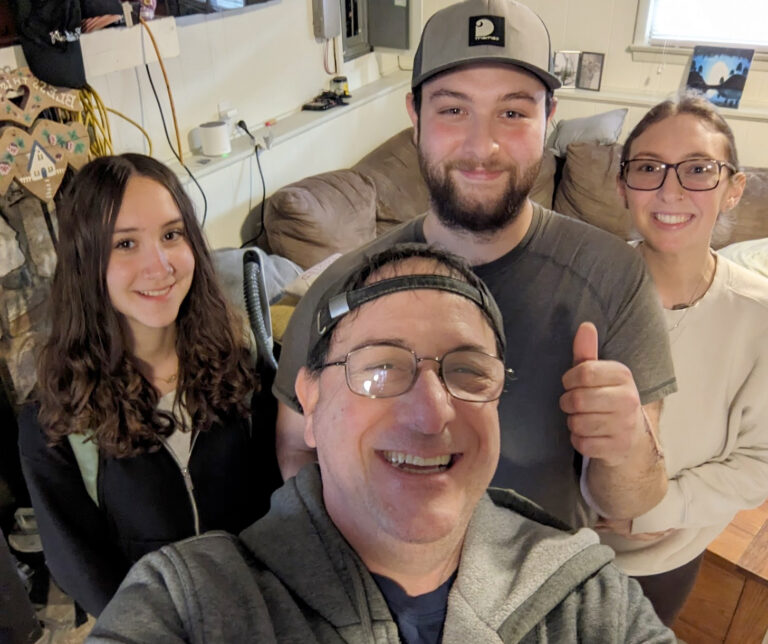
I’m Jay Deutsch. In 2015, Larissa, my soulmate of twenty-six years and the mother of my two children, died by suicide after living with depression for most of her life.
For five years, I spiraled. I drank every night. I avoided my life, self-medicated, coped, and survived, but I wasn’t living.
Time didn’t heal me. Talking about the loss in a support group for three and a half years didn’t heal me. Learning how to manage and carry grief wasn’t the life I wanted for myself or my children.
Everything changed when I learned how the brain works and how to change the thoughts, emotional responses, beliefs, nervous system reactions, and identity that had become connected to the loss.
This work saved my life and changed my children’s lives. Now I guide other people through the process of healing their minds, bodies, emotions, identities, and futures.
That’s me in the photo today with Emma, Zachary, and Zachary’s wife, Nicole. We’re living, smiling, and watching our family continue to grow and thrive.
If grief and pain are still controlling your life, it isn’t because you’re broken. It’s because no one has shown you what actually needs to change.
Are You Ready to Stop Coping and Actually Heal?
You can’t change what you don’t understand.
This workbook will help you see why the pain continues and what must begin changing for healing to become possible.
Enter your name and email below to receive your free workbook.